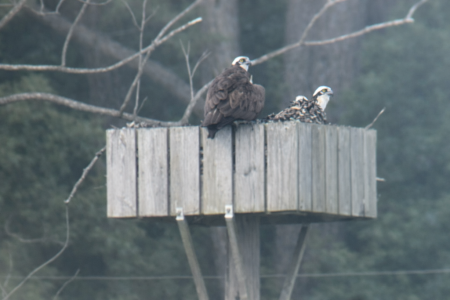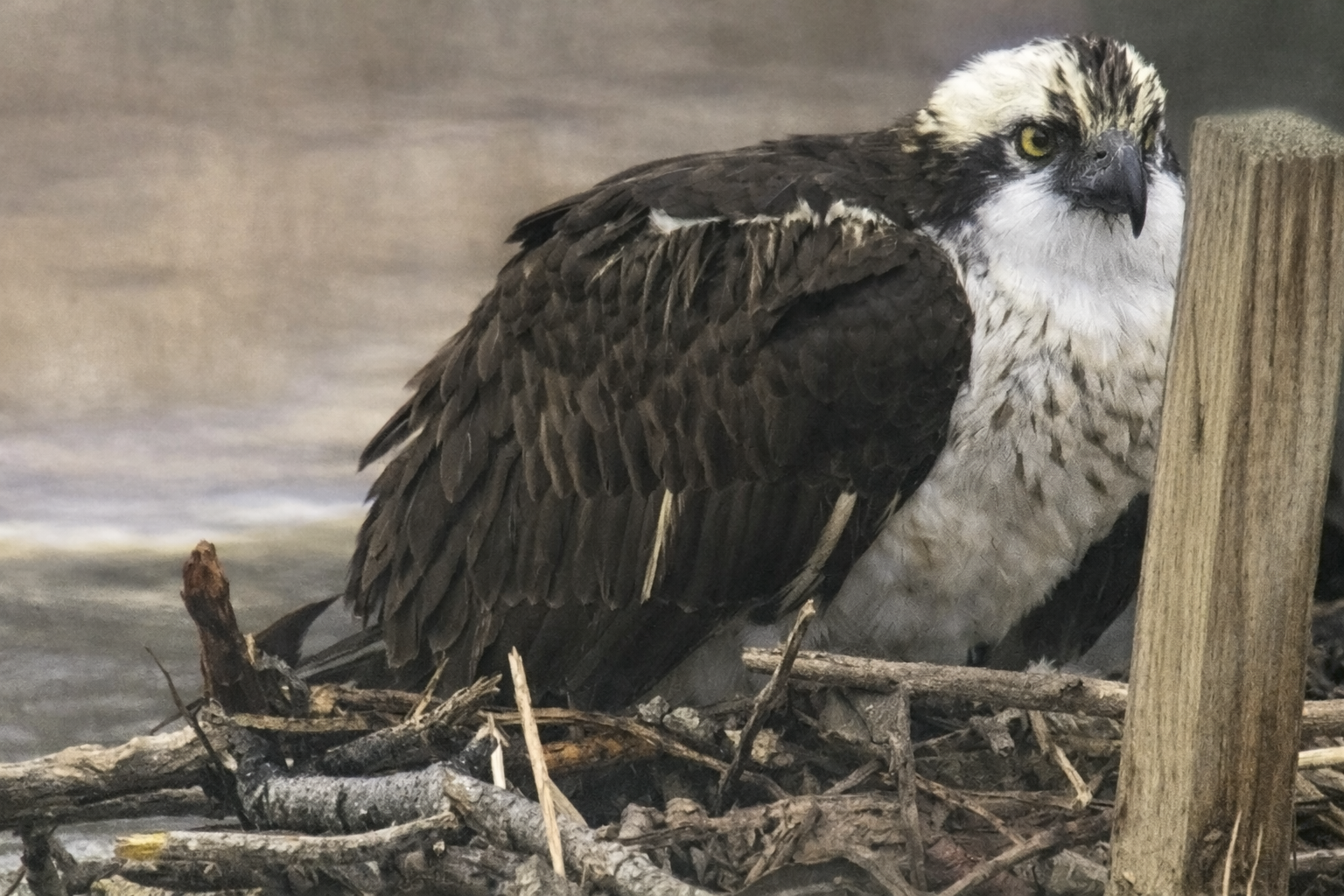

The loss of his and Ethel’s eggs proved the end of the line for Mark-8. He left within the first few days of June. Mr. Bennet had remained banished and neither male returned to Nest 1 or Nest 2.
So, around the middle of June, Ethel invited Little Boy over for dinner, which he delivered. They did a bit of Nest 1/Nest 2 hopping, but Ethel preferred her meals delivered to Nest 2.
LB also kept delivering fish to Lily on Nest 4 for a while, which she accepted, and then immediately threw him off the nest. When those deliveries tapered off, Lily became a self sufficient fisher. She dined on the top branch of the dead loblollies at the southern corner of North Copse, also part of her Nest 3/Nest 4 territory. She handily chased off Ethel, LB, and any other intruder on any piece of her territory.
LB settled in with Ethel for the rest of the season and delivered fish. Ethel performed her unsynchronized swishing and at one point, after a mating visit with LB, shot out something that didn’t quite look like a regular PS—Poop Shoot, in the vernacular of online bird-cam chatterers.
Note: Patricia Brennan, Associate Professor of Biological Science at Mount Holyoke, discovered, this century, that some birds have genitals. Previously, scientists believed a “kiss” of the multipurpose cloaca beneath each gender’s tail did the fertilization trick for all birds. The cloaca does it for Ospreys, giving the female significant control over the outcome.
In response to my query about Ethel’s expulsion, Professor Brennan replied, “[F]emale cloacal control for sure! One of the consequences of most birds lacking a penis is that males really have to convince females to accept sperm and females really have to gape their cloaca. Otherwise they can eject it easily after mating as you have seen.”
None of the Ospreys I watched acted like they planned to gear-up the reproductive equipment for a second try. They looked like hawks with the summer off. The 24/7 nest confinement had been lifted. They didn’t have to mate, feed chicks, or teach them to fly.

This made for the second year without a fledge class from Island Creek. In 2024, I had plenty of reasons explaining the loss of all the hatchlings. They’d been late hatches, unable to temperature regulate when parching weather hit, already diminishing fish supplies threatened dehydration. Lots of reasons.
Not in 2025. What would inspire vast numbers of “Chesapeake” imprinted Ospreys, within the same fortnight, to abandoned their eggs?
I also don’t know about Red-Winged Blackbirds, there were so many they’d cast a 10-acre shadow across the marsh as they readied themselves to feed. Now, a half-dozen are quick to the winter feeders on the back porch.
Previous Episode 2025-02: Young Female Overturns Tradition
Next Episode 2026-01: Almost Summer


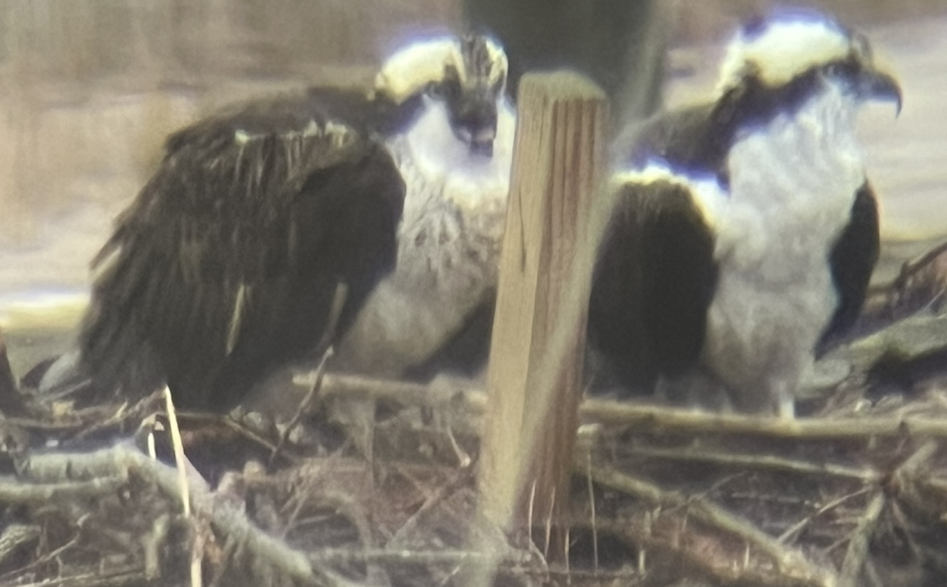

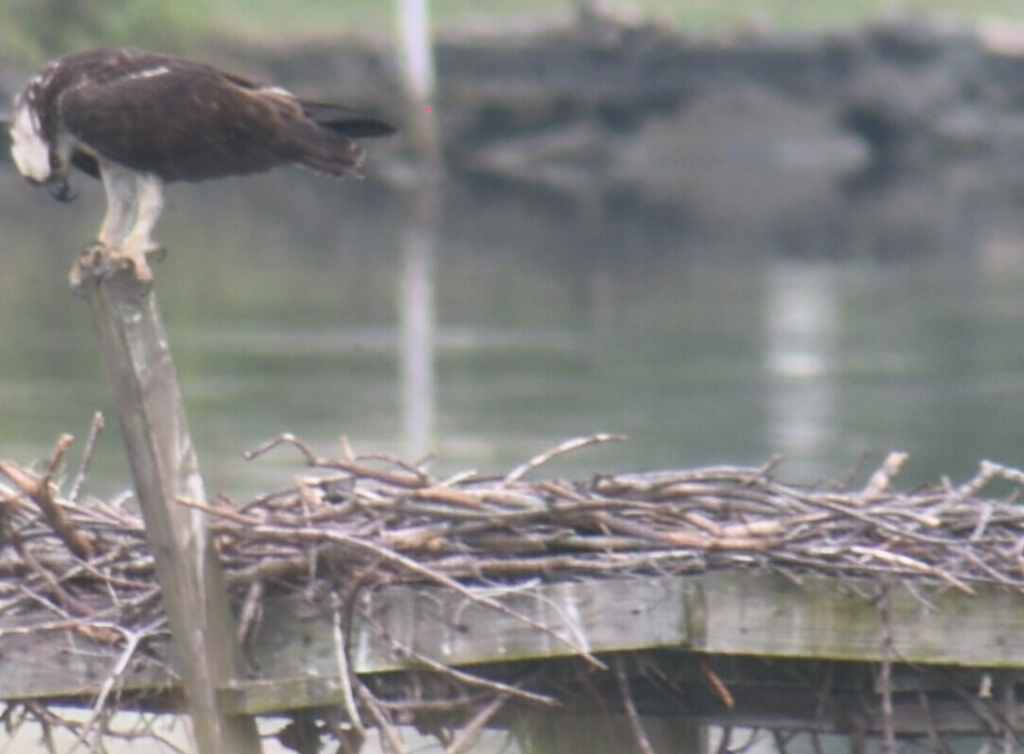


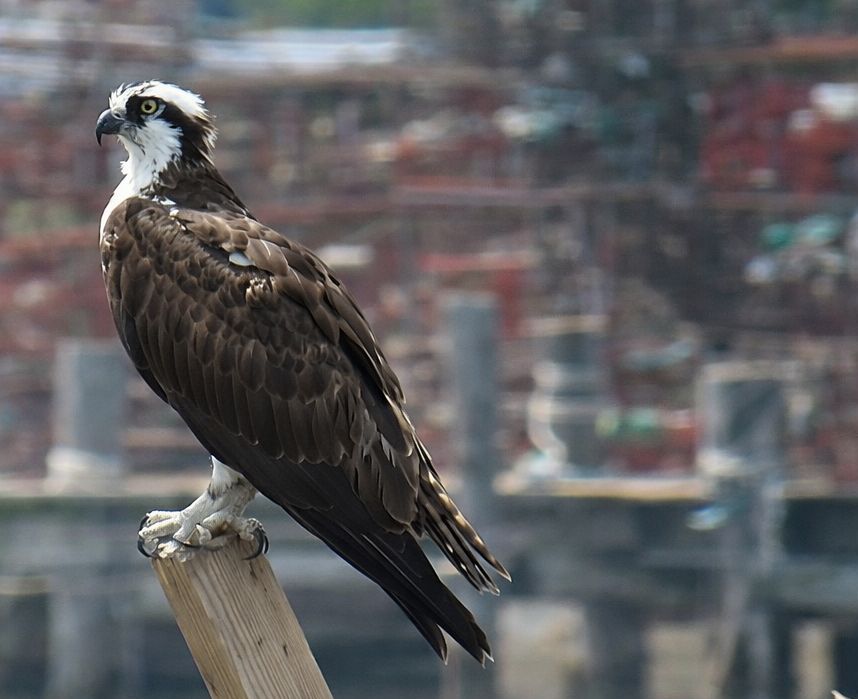


 Plus, I wanted to try out my new nomenclature. I named her NF1 for New Female, Nest 1.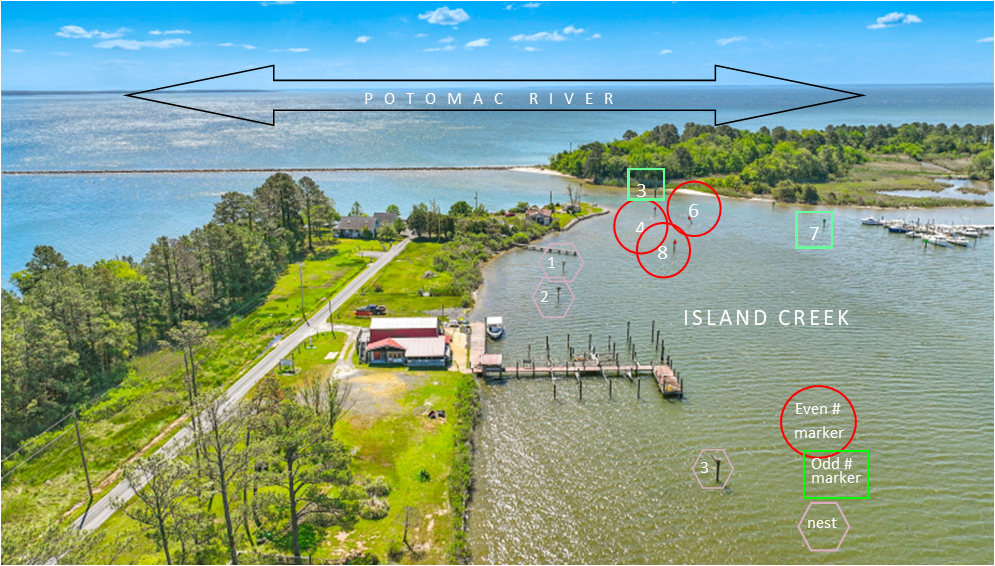
 Note: Pine borer beetles are always with us, arborists explain, but healthy trees fight them off. Trees stressed by drought, salt water intrusion, or soil compaction will lose.